 Bob Lake Association
The South
Before logging started, there were only hunting and trapping trails leading up from the Gull River to the south end of Bob’s Lake. In 1920, the Gull River Lumber Company was one of the main logging companies in the Minden area. It controlled lots 11 and 12, concession XIV in Lutterworth; lots 9, 10, and 11, concession I in Anson; and lots 9 and 10, concession II in Anson. This was most of the south and west sides of the lake. A main logging trail came up from the River Road and then branched into a series of smaller trails going up the west side of the lake and then down the east side of the river.

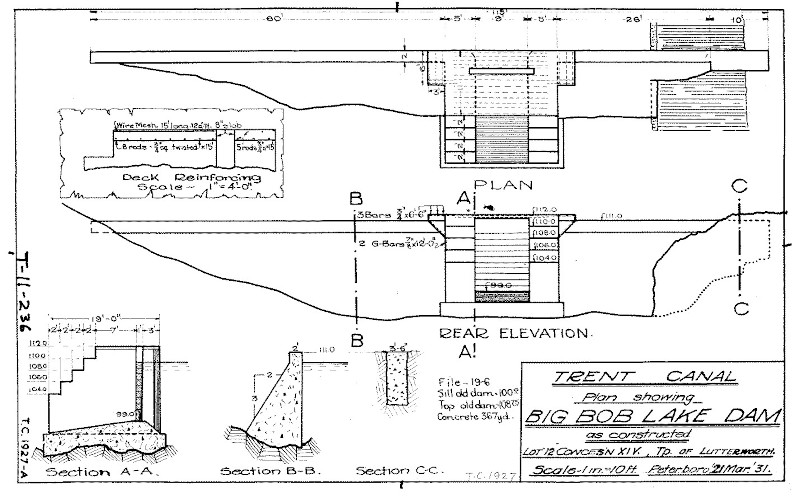
Cutting the white pine trees and stock piling the logs during the winter, the loggers used the spring runoff to send the wood from Big Bob Lake over the 1890 loggers’ dam, down the creek into Middle and Little Bob Lakes, and then out a loggers chute at Rackety Falls into Gull Lake. On Big Bob Lake, large scale logging ended in 1929. The loggers’ dam was removed and a cement dam was constructed by the Trent Canal System in 1931.
Iola Otto-Tennison purchased the farm on lot 6, concession XIV, Lutterworth in 1931. Tennyson Road, which back then was a logging trail, started by her farm house at the northeastern corner of the farm. Her completely renovated farmhouse is now 1021 Tennyson Road.
In 1940, the logging trail from the Tennison farmhouse was improved into a bush road to access the Pettinger/Horne cottages. The first part of this bush road was unofficially called the South Big Bob Lake Road. The second part to their cottages was called the Private Road.
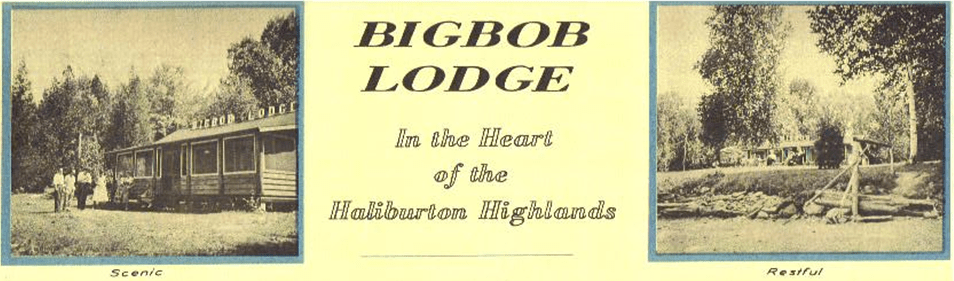
At a cost of $6,000, David and John Hamilton bought all of lots 9 and 10, concession I in 1946. To reach their property from the River Road, they would have extended South Big Bob Lake Road, past the Private Road, to the southwest corner of the lake. South Big Bob Lake Road then became known as The Road to Big Bob Lake or The Road to Bigbob Lodge. David and John constructed the main lodge building, a cook house with storage shed, and 8 basic, single room cabins with outhouses. Bigbob Lodge opened in the spring of 1947. It offered family cottage rentals in the summer and hunting and fishing in the spring and fall.
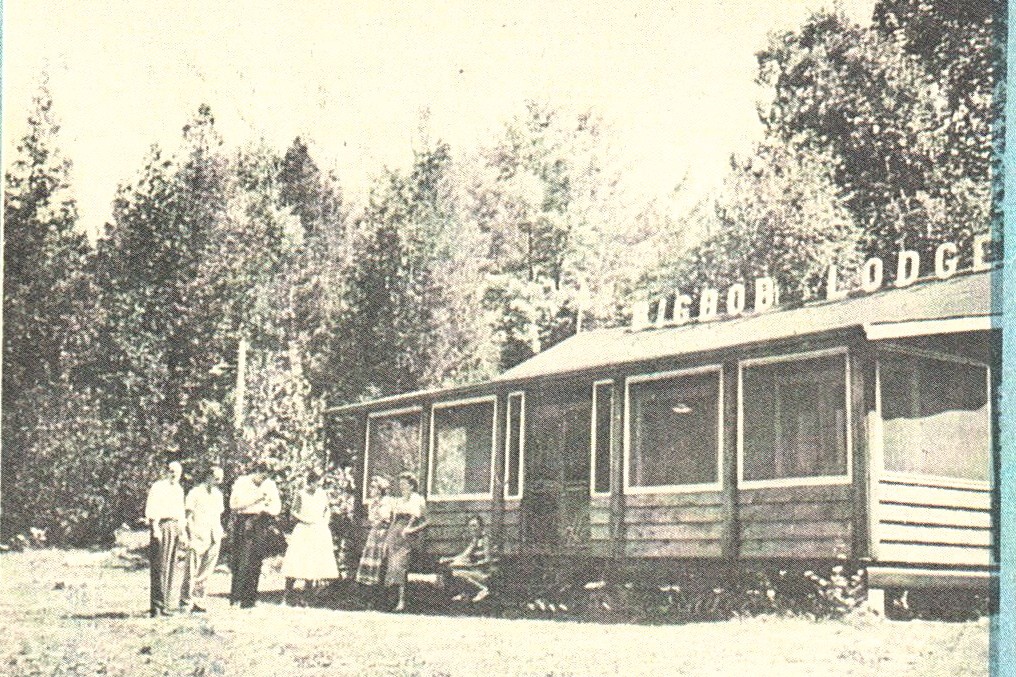
The Lodge had hydro hooked up about 1952 but never had telephone service.
In January 1955, Richard Paterson, Lloyd Brown, and silent partner Taylor Kunshan purchased from the Hamilton brothers all of lots 9 and 10, and part of 8, concession I. At the time of the $14,000 purchase, there was no road past the Lodge. There was a rough, old Gull River Lumber logging trail which ran from the Lodge up to the top of lot 10 where it looped westward to the river and back down to the dam.
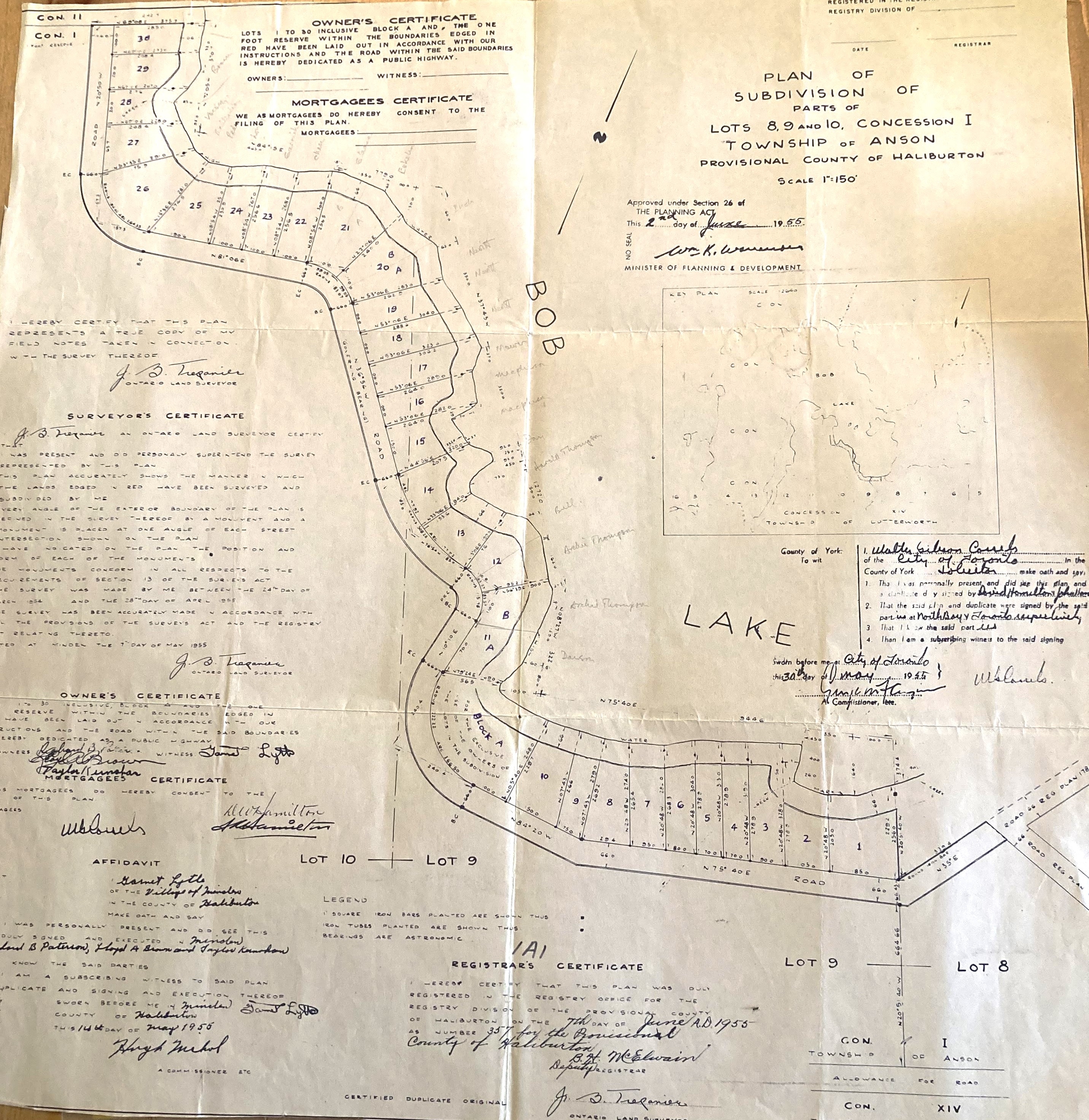
By June, Subdivision 357 had been surveyed. It was made up of 31 lake front lots. Kernohan Construction was hired by the developers to build a cottage road along the back of the lots. It was a single lane, twisty, dirt and gravel bush road that ended at a big boulder behind lot 25 (now 1512 Tennyson Road). Upon completion of the unnamed road, Brown and Paterson starting selling their lots.
At the end of June, Orval and Irma Gillespie were the first to buy in the new subdivision. For $10,000, they bought subdivision lots 1 to 10 and the land below. This large piece of land contained all the Bigbob Lodge property and cabins. For the first few years, the Lodge was busy with Irma doing the cooking and Orval doing the maintenance. Orval kept his job in Toronto and came up on weekends to help Irma look after the Lodge.
Mark MacKay had returned to Minden from working in maintenance at Camp Borden in July 1955. Mark started his own construction company and the original cottages in the South Bob Lake development would have been one of his first projects. From 1955 to 1959, he built 14 cottage shells, 30’ x 24’ with three basic floor plans and indoor plumbing at an approximate cost of $3,000 per cottage. For extra charges, he would move interior walls, add on screened-in porches, and build boat houses.
In the fall of 1955, eight more of the original 31 lots were sold. Part A of lot 20 was purchased by Frank and June Andrix, Americans from Lockport, New York. Each summer for the next six years, the Andrix family drove up and stayed for July and August. One of their teenage daughters was a waitress at the Lodge. Audrey Macpherson along with her brother Angus purchased lot 16. Mark built both of these family cottages.
The author’s in-laws, Margaret and Archie Thompson, bought parts of lots 11 and 12 in the spring of 56 for about $1,100. During the summer, a driveway was bulldozed and the lake front cleared. In September, Mark MacKay built their 3-bedroom, clap board cottage with a screened-in porch, a septic system, and a boat house for about $4,800.

The hydro line went into the subdivision in June and July 1956.
The Gillepies were good friends of the Dollo family who owned the Minden IGA. Starting that summer, the IGA summer staff picnics were held on the front lawn of the Lodge.
Ray Weldon, a lawyer and land developer from Lindsay, bought lots 9 and 10, concession II in 1957.
Original lots 18 and 19 were purchased in the fall of 1957 by Ernst and Thilde Nevitt. Extra lot 19 cost $1,600. For a total price of $5,500, they got lot 18, a 3-bedroom clap board cottage with electrical, insulation, plumbing, septic system, and screened-in porch. The cottage was built in the spring of 58.
Business at Bigbob Lodge had slowed down by 1958 and that summer, the Gillespies began to sell off their rental cabins as cottages, starting with the three easterly lots. The first to buy were: lot 3, Henry and Beulah Christian; lot 4, Herbert and Eleanor Smith; and lot 5, George and Violet Potts. Today these would be; 1047, 1045, and 1041 Lodge Lane, respectively.
Newlyweds Bill and Shirley Dawson had stayed at the Lodge in 1956 and in 57. Bill said that Irma’s food was fantastic. They knew the Andrix’s waitress daughter. The Dawsons loved Bob Lake so much that in the spring of 1958 they bought part of lot 11 to the west of the Lodge property. When they were clearing their lot in May, they found the remains of the Lodge’s still from the 1940s. After it snowed the first three Saturdays in June, Bill and Shirley questioned the crazy Haliburton weather that they just bought into.
In July, the South Bob Lake Cottagers’ Association was formed as a social organization. It had 11 cottages, there was no fee, and Roy Day was chosen president. Roy and his wife Dorothy had bought lot 14 and Mark built their cottage in 1955. Roy was probably picked for president as he was the most social of the group. He was infamous for his afternoon boat cruises. Roy would putter along the shore and stop in for a drink at every cottage that had people outside. Some days he had trouble finding his way home.
In August, the newly formed association sent a letter to the Minister of Transportation complaining about the low water conditions on Bob Lake. The reply blamed the lack of participation and low spring run-off.
At the end of the season, the Dawson’s again questioned their decision to buy in Haliburton as they prepared their cottage Thanksgiving dinner in a raging snowstorm.
In May 1959, the cottage road was described as a “single-lane, pothole filled, goat track”. It was in such bad shape that an association fee of $10 annually was adopted to pay for road maintenance. There were 15 cottages in the association and three refused to pay the $10 fee. Plus members were asked “to work two hours a month on fixing up the road behind their cottage.” Audrey Macpherson was elected the association’s first secretary, a position she held for the next 17 years.
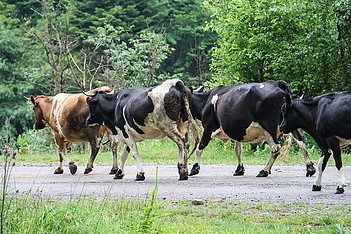
On a June morning of 1959, Bill and Shirley Dawson awoke to the sound of a freight train rumbling by. Looking out their front door they saw a stream of cattle. Joe River’s herd had escaped from his upper pasture, travelled along the cottage road and down their driveway to get a drink at the lake.
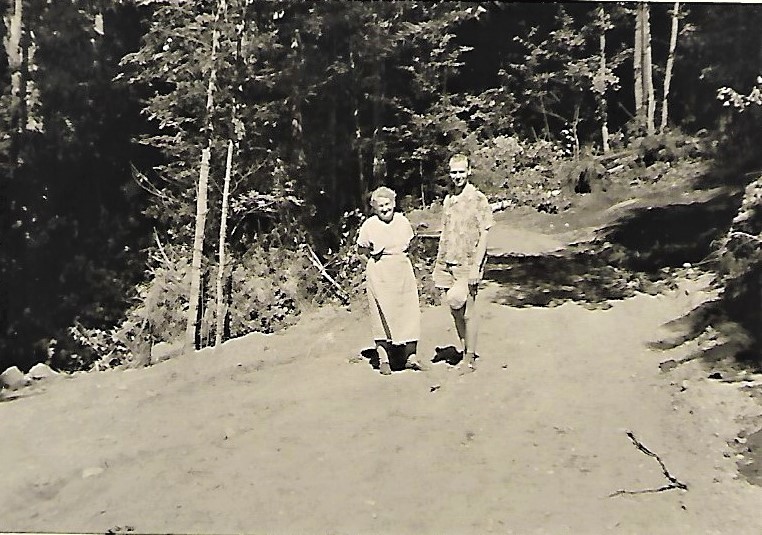
In October 1959, Ulrich Dalacker and his finance Edelgard bought lot 2 from the Gillespies for $600. It did not have a lodge rental cabin on it and they never built their own cottage. Two or three times a summer, Uli and Edie would drive up from Toronto to visit their property. They stayed at the Lodge until it closed and then camped on their lot.
The store at Bigbob Lodge closed in the fall of 1959. The next summer, 12 year old Tom Thompson, with help from his 9 year old sister Sue (now Pyke), started a grocery delivery service. Most families who stayed up during the week did not have a car at the cottage so couldn’t get to town for supplies. Tom and Sue offered milk, cream, butter, cheese, and eggs. No ice cream as they couldn’t keep it frozen.
As there were no phones, on Monday mornings, Tom and Sue would use an old a flat-bottomed, wooden punt with a 3 hp motor to go, dock to dock, up the cottage line taking food orders for Thursday.
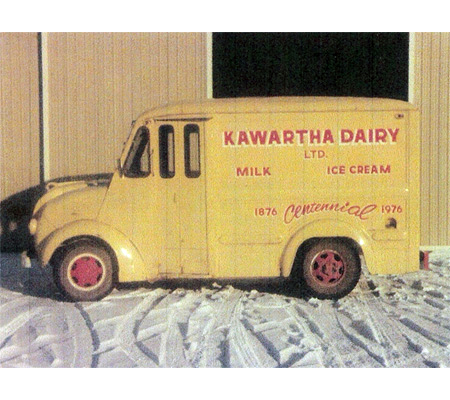
Monday afternoon, a Kawartha Diary milk truck would stop at the Thompson cottage to deliver the supplies that had been ordered the previous Thursday and to pick up the new orders. Tom and Sue would again use the punt to deliver the food to the cottagers before dinner time. The process was repeated each week throughout July and August.
There were 15 members in the south association in 1960, the fee was raised to $15, and all members paid. Mark McKay, the local contractor who built most of the south’s cottages, offered to remove snow from cottage roofs at $6.50 per shovel. Thirteen members used his service.
In 1961, Ray Weldon started selling cottage lots on Big Island. He also constructed the extension of the 1955 cottage road into lot 10, concession II in order to sell cottage lots on the point above Brown and Paterson’s land.
The association’s fee was lowered back to $10 per cottage in July.
In August, the first recorded lake water tests were done by Archie Thompson (Sue Pyke’s father). Results: no domestic bacteria were found.
First along the new road extension, the Jewinski family bought a large cottage lot from Weldon in the fall of 61. They built four cottages and started Beaver Bay Cottage Rentals. They rented cabins for about 20 years.

Bigbob Lodge closed in the fall of 1962.
At the July 1963 general meeting, cottagers along the new road going into the Weldon property asked to join the association. It was decided that once they improved their road they could join. The new cottagers had their road graded in October and jointed the association in the spring of 1964.
By the summer of 1964, most cottagers had a car at the cottage during the week so the Thompson milk delivery service stopped.
In the fall of 64, the Haliburton Cottager’s Association noted that Bob Lake had the greatest annual drop in water level of any lake in Haliburton. The drop was recorded at nine feet at the dam. In comparison, the next worst lake dropped seven feet and the best drop was only two feet in a season. The HCA assured our association that they will give Bob Lake top priority in their fight to reduce and eventually “eliminate this nuisance”.
Bob Lake was restocked with trout in June 1965.
There were about 39 cottages in this southern development in 1965.

The Gillespies sold the main Lodge buildings and the four western sleeper cabins in 1965. This was original lots 6 to 10. Unfortunately, in the summer of 1966, the second of the Bob Lake drownings occurred when the new owner got into trouble while swimming in front of the lodge. Neighbouring cottagers pulled her from the water and frantically tried to revive her. As there were still no phones, other cottagers raced into town to get the doctor but he arrived too late to save her.
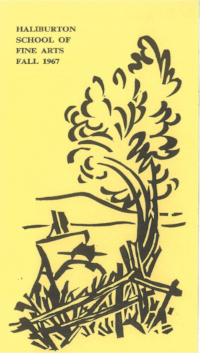
Thilde Nevitt was an internationally recognized weaver. In 1967, she helped found the Haliburton School of Fine Arts at the Haliburton High School which for many years offered summer fine arts courses. The fine arts school became part of Fleming College in 2004 and now offers summer and full year courses.
Because of the drowning in 1966, people were concerned with the lack of telephones to handle emergencies. So the first telephones were installed in the summer of 68. It was a party line between three south end cottages and Joe Rivers’ farmhouse on the River Road.

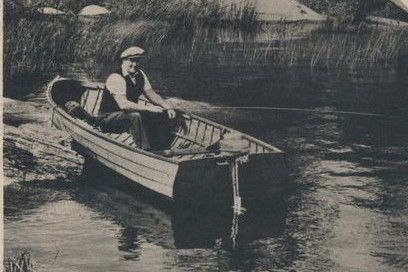
Angus and Audrey Macpherson had built their cottage in 1955. In the late 1960s, they bought a black Grew boat with a Black Panther 100 hp Mercury outboard motor, similar to the boat shown below.
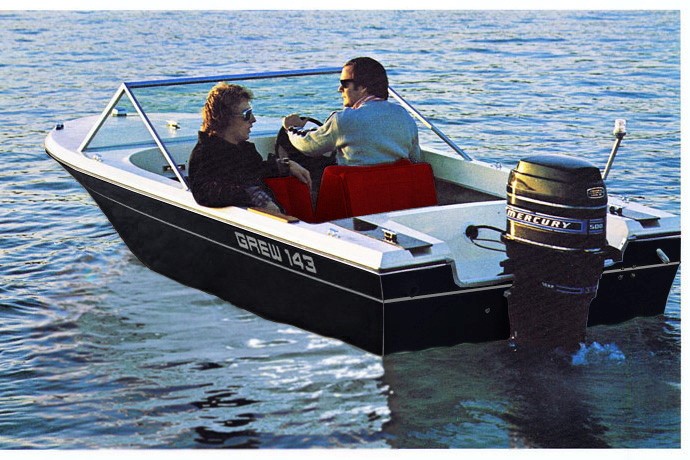
By far the fastest boat on the lake, normally they just slowly puttered around the lake on afternoon cruises.
The bill for the cottage road work done in July 1969 came in $283 over budget. So a special assessment of $25 per member was passed on top of the $10 annual fee.
With a bank balance of $13.98 in April 1970, the association raised its annual fee to $20 per cottage in May. A cap of $600 was placed on yearly road work.
Along with his girlfriend, the teenage son of a cottager broke into and vandalized 27 south end cottages in February 1972. A small plane flying over the lake spotted the damage and alerted the OPP. Unfortunately, a few of the most heavily damaged cottages did not have insurance. Those owners could not afford the repairs and were forced to sell.
In the summer of 1972, the county straightened the River Road by moving the road to its present route below the Tennison farmhouse. The name of the Road to Bigbob Lodge was changed to Tennyson Road. Note the spelling mistake but the error was never corrected.
When its renovations were complete in the fall of 1972, the River Road was renamed Deep Bay Road.
A surveying error was discovered in July 1973. The original cottage road placement did not follow the 1955 Brown and Paterson survey plan. For 17 cottage lots, this incorrect road location drastically changed their back lot survey lines. It took tens of thousands of dollars, much legal hassling, more surveys, and more road construction to finally fix the “land severance’ problem in 1991.
At the general meeting in September 1973, winter plowing of Tennyson Road was discussed at a cost of $40 per plow and $8 per driveway. Not enough members were interested to proceed.
Gord Flann had purchased his lot in 1963 and Jim Murray had purchased in 1971. At its general meeting in September 1976, both were elected to the association’s board of directors; Gord as secretary/treasurer and Jim as vice-president. Gord served as treasurer for the next 45 years. Jim became president in 1985 and held that position for the next 21 years.
In the spring of 1979, Thilde Nevitt was one of the founders of the permanent art gallery for the Haliburton Guild of Fine Arts at Rail’s End in Haliburton village.

At the general meeting in June 1979, the association fee was raised to $25 per cottage. Members were also reminded that various types of “waterfront improvements can have direct or indirect effects detrimental to the health of the lake”. Also, Jim Murray started the steps to incorporate the association.
George Empy was the president of the East Big Bob Lake Association in 1979. He attended the south association’s September meeting where he made a presentation asking to have his association merge with the south. The Private Road was in such bad shape that the offer was voted down as the south did not want to pay for the work needed to fix the Private Road. Also, an offer was made to the association to buy the back 84 acres in lot 10 for about $25,000. The offer was turned down.
In April 1980, Walsten Ltd (Walter Stender) from Kinmount bought the back 84 acres (below Tennyson Road) from Brown and Paterson. He started logging the property for soft wood trees to be used for firewood.
The association voted to join FOCA at its June 1980 general meeting.
At the fall general meeting of 1983, the association voted to go from two general meetings to one Annual General Meeting starting in July 1984.
Robin Woodcock, a surveyor from Haliburton Village, in the fall of 1987 bought lot 11, concession II in Anson from Walter Stender. Woodcock had the Coaster road bulldozed and four large lots surveyed. The lots were priced from $46,000 to $56,000. Three of these lots were subdivided and 9 or 10 of those smaller cottage lots were sold in 1987, 88, and 89. Brad and Gloria Sherman bought the fourth lot in November 1988. Their lot was 12 acres and had 350 ft of lake frontage, lots of trees, and contained about 85% of the Coaster road. In the spring of 89, Gloria formed the Coaster road association with 10 owners.
Lot 11 and part of lot 12, concession I had been bought by Robert Worrall in 1963. He constructed Avonlea Lane in the spring of 1991. The next year Robert surveyed and started selling cottage lots on the east side of the river.
In June 1991, the Coaster road association joined the South association as associate members. This meant that they would pay a reduced association fee and would pay for the maintenance of their own road. Gloria Sherman was elected to the South’s executive as a member of their road committee. Gloria worked on the road committee until 2021, that’s 30 years on the board.
There were 48 cottages in the association and dues were $50 in 1991. The south’s first annual regatta/BBQ/social was held in August. It was hosted by the Brouwers and Hunting families on the old lodge property. The regatta ran until 2004 when it was forced to be cancelled because of the high cost of insurance.

The winter parking lot was cleared on Tennyson Road at the mouth of Avonlea Lane in October 1991. It has been snow plowed ever since.
Sue Pyke became the lake steward for Bob Lake in July 1993. She still holds that position, that’s 30 years and counting.
There was a lengthy article on September 6, 1994 in the Minden Times featuring Irving (Ernst’s son) Nevitt and his long distance cycling. Irving was 60 years old, recently retired, and rode at least 45 km per day on the cottage roads around Minden. To prepare for a competition, he would ride 165 km or more in a day. Once a month, just for fun, Irving rode from his home in Hamilton to Bob Lake (approximately 300 km) in about 8.5 hours.

The association started snow plowing Tennyson Road in 1996.
The Dalacker family had moved back to Germany in 1979. The property is still undeveloped and current owner Doris Dalacker (daughter) is still living in Germany. When her mother died in Germany in 1995, Doris brought both her mother and father back to Haliburton and reburied them in the Twelve Mile Lake Cemetery. Doris returns every three or four years to check on her Bob Lake property and visit her parent’s grave.

With the 911 project going ahead, in 2001 the entire cottage road was named Tennyson Road, the road to the old lodge became Lodge Lane, and Harry Hunting’s driveway was named Mohawk Trail.
In the winter of 2002/03, the cost of snow plowing more than tripled to about $750. The association agreed to pay $300 and for the first time, winter users were required to pay the rest of the bill.
Also in 2003, Lodge Lane cottagers joined the association. There was a pro-rated association fee system for the three roads; Lodge Lane paid $50, Tennyson Road $75, and Coaster Lane $125.
Jim Murray was finally able to collect all the necessary fees and get the by-laws approved so the association was incorporated in October 2004. Its name was changed to the South Bob Lake Property Owners’ Association.
In July 2006, Coachwhip and Maiden Trail cottagers joined the association and became part of the Coaster Complex.
Brad Sherman had been helping on the road committee since 1993 and became the association’s road manager in 2008. As of 2023, Brad is still the road director – that’s 30 years (and counting) of working on the roads.

The first South Bob Lake golf tournament was held at Beaverbrook in July 2008. The winners were Zandra & Franz and Vanden Bijllaardt and Garry & Donna Mees.

Starting in the spring of 2013, all members paid the same association (what used to be called summer) fee of $150 regardless of road location.
At the 2013 AGM, the idea of a single association fee (combining the summer and winter plowing fees) was discussed. A survey was taken in 2014 and the majority of association members were against having a single yearly fee.
The lake’s sixth major cottage fire occurred early in the morning of November 21, 2021. A 1963 cottage on Tennyson Road was completely destroyed. The owner was awakened by his fire alarm, escaped unharmed, and called 911.

Shirley Dawson passed away in June 2023. She was the last of the original 11 cottage families who formed the South Bob Lake association in 1959. The Dawson cottage is now owned by Shirley’s four grandchildren.
At the July 2023 AGM, members voted to adopt a single winter user fee encompassing the snow plowing of all five association roads.
Thanks to the following who contributed photos to this chapter:
- Bob Ballantyne, Bob Lake Cottager
- Doris Dalacker, Bob Lake Property Owner
- Deb Gillespie, daughter-in-law of Orval & Irma Gillespie, Bob Lake cottager
- Hans Jewinski, Bob Lake Cottage
- Don Murdoch, Bob Lake Resident
- Greg Pyke, historian, Bob Lake cottager
- Dave Roberts, computer guru, Bob Lake cottager
- Doug Thompson, ex-Bob Lake Cottager
- Sandy Thompson, computer master, ex-Bob Lake cottager
Have a comment or contribution? Just use the “Leave a Reply” form below or connect with Greg by submitting the contact form on The History and Stories of Bob Lake page. Go back to <<< Chapter 15 or proceed to Chapter 17 >>>


Thanks again Greg for another fascinating chapter. What a lot of research! This is a valuable record of our lake history for everyone to enjoy.
LikeLike